A wobble stool lets you move while you sit. It has no backrest to hold you in one position. Instead, the seat moves with you, so you keep moving instead of sitting still. You may also know it as a wobble chair, balance stool or active sitting stool.
Below: how such a stool works, how it differs from a saddle stool and an exercise ball, and what to look for when you choose one for the office or for home.
What is a wobble stool?
A wobble stool, or active sitting stool, is a stool without a backrest, with a seat that can tilt. So you never sit completely still: your body keeps making small corrections to stay balanced. It happens by itself; you don't have to think about it.
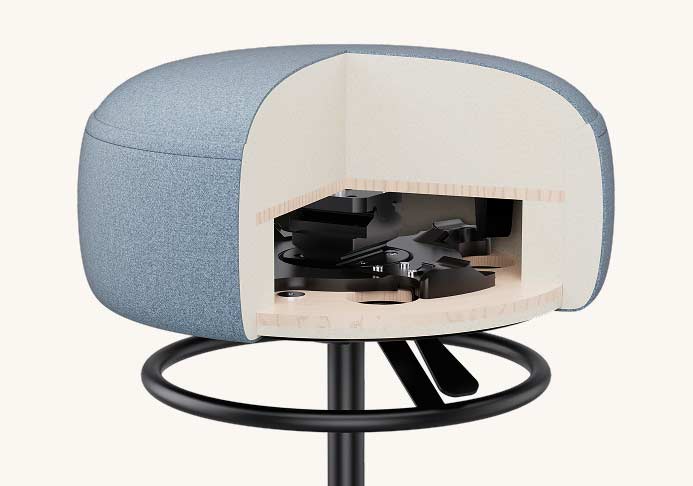
Broadly, there are three kinds. A classic wobble stool tilts as a whole on a rounded or sprung base. A saddle stool has a saddle-shaped seat that opens your hips; the stool itself usually moves little. An exercise ball moves because the ball rolls and bounces. The Swivvy Office is an active sitting stool that works differently: the movement is in the cushion, in a patented motion system, while the base stays still.
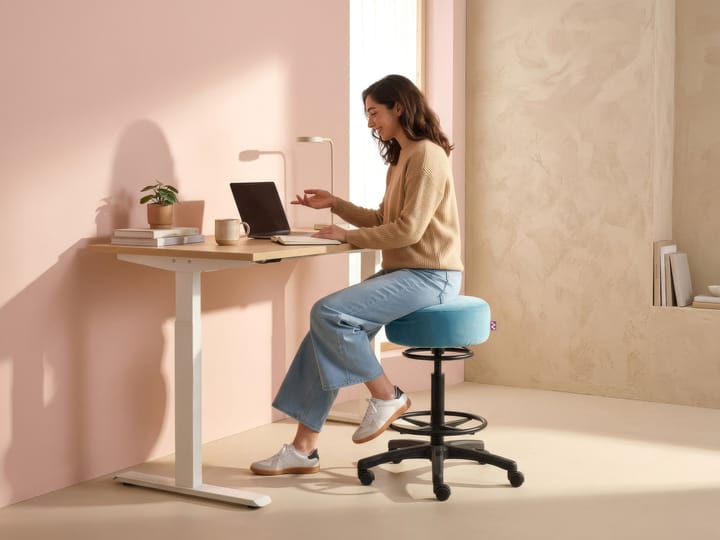
Many active stools, the Swivvy Office included, are higher than an office chair. Your hips sit slightly above your knees, in an open posture that makes sitting upright easier. That also makes it a good stool for a sit-stand desk: you switch between sitting and standing without moving the desktop far.
Not sure yet? Here are the pros and cons of a wobble stool.
Why active sitting?
If you work at a desk, you easily spend most of the day sitting, often for hours in the same position. A regular office chair supports you well, but asks little of your body: you lean back, slump down and stay there.
A balance stool works differently. Because the seat moves with you, you keep adjusting your posture. Your pelvis tilts, your back and core stay lightly engaged, and you change position more often without noticing.
Active sitting doesn't replace getting up, walking or exercise. It makes the hours you do spend sitting less static. That is why many people alternate: part of the day on a wobble stool, part of it standing at the desk.
Wobble stool, saddle stool, exercise ball or Swivvy?
Each type moves in its own way and is made for something different. Here are the differences side by side.
| Classic wobble stool | Saddle stool | Exercise ball | Swivvy Office | |
|---|---|---|---|---|
| How it moves | The whole stool tilts on a rounded or sprung base | Usually little; on some models the seat tilts | The ball rolls and bounces in every direction | The cushion tilts in every direction; the base stays still |
| Sitting still | Hard; it keeps wobbling | Yes, the seat is firm | Hard; the ball keeps moving and can roll away | Yes: the lever locks the cushion |
| Posture | Upright, feet on the floor | Open hip angle, legs slightly apart, as on a horse | Upright, low to the ground | Upright, hips above the knees, feet on the floor or the foot ring |
| Seat height | Often adjustable | Adjustable, often high | Fixed; you choose the ball size | Adjustable with a gas spring, 43 to 78 cm |
| All-day use | Mostly for variety | After getting used to it, mainly at high workstations | Mostly short spells, for variety | Yes: you switch between moving and sitting still |
General characteristics per type. Models differ by brand.
What to look for
Seat height and desk
Measure your desk. On most active stools you sit higher than on an office chair, so a sit-stand desk or an adjustable desktop works best. Choose a stool whose height range fits it.
Moving and sitting still
For precise work, a phone call or a video call, you sometimes want to sit still for a moment. A stool you can lock lets you switch between the two without getting up.
Base and floor
Castors are handy if you move around a lot. A fixed or weighted base is steadier and takes up less space. Think about your floor too: hard floor or carpet.
Support for your feet
At a higher seat height, your feet don't always rest flat on the floor. An adjustable foot ring gives them a place to rest and lets you choose the angle of your knees.
Upholstery and care
You sit on it every day. Choose a fabric that is comfortable, lasts and is easy to clean.
Getting used to it
Active sitting takes some getting used to. Start with a few hours a day and build up. Not sure yet? Choose a seller that lets you try it or return it for free.
The Swivvy Office
The Swivvy Office is an active sitting stool for the office and the home office, designed in the Netherlands to look like furniture, not a medical aid. Inside the cushion is a patented motion system that lets the seat tilt in every direction, as on an exercise ball, while the base stays firmly in place.
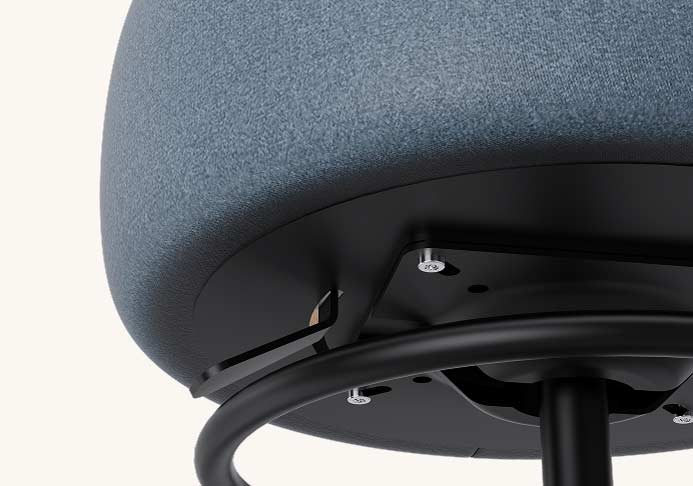
Want to sit still for a while? Use the lever under the seat and the cushion locks. One movement switches you between active and stable, without changing chairs.
You choose from three stands: Classic with a five-star base, Wheels with load-braked castors and Disc with a weighted round base. You set the seat height with a gas spring. The foot ring is optional, at no extra cost, and adjusts in height too. The cushion is upholstered in vegan microvelour in Mist, Slate, Fjord or Dune.
From €399.95 incl. VAT. Free delivery in the Netherlands, 14 days to change your mind with free returns, and a two-year warranty.
Configure your Swivvy